A growing phenomenon - ascribing water a financial value!

On behalf of the Federation, the Office for Systemic Justice signed an international petition, organized by “Fondation Danielle Mitterrand.”  The petition calls for an end to water futures trading and the financialization of water.  (Futures trading allows speculators to bet on the future price of a commodity).

Note: As climate change increases fears of water scarcity, water joined gold, oil and other commodities traded in the financial markets.  Hedge funds are now able to hedge against (or bet on) future water availability.  Supporters argue the new market will create more certainty around water prices for farmers and municipalities.  However, from a human rights perspective, treating water as a tradable commodity puts a basic need under the influence of financial institutions and investors.  Some people will make money from the suffering of others.  Given that water is a necessity for all life on earth, it is critical to establish water rights and water quotas – and to avoid financial speculation on this source of life.

 STATEMENT WATER FOR LIFE, NOT FOR PROFIT! On 22 March 2021, the United Nations celebrates World Water Day. The official theme of this day is “Valuing Water”, a title that should ring alarm bells: there is only a short step between the idea of value and the idea of price! Yet, ascribing nature a financial value is a growing phenomenon, which has just culminated in the listing on the derivates exchange of the most essential element for humanity and life: water. Listing water on the commodity market: a crime against life!

On 7 December 2020, the world’s largest financial derivatives exchange, CME Group, launched the first water futures market. Investors and speculators can now gamble on the price of water in California. In theory, futures contracts should make it possible to combat price volatility and provide security for farmers. But reality clearly shown the opposite. The impacts of “water markets” already implemented in several countries are catastrophic.

In Chile, rivers are sold at auction and acquired by billionaires who use the water to mass-irrigate avocados or supply mines, while millions of people attempt to survive widespread drought caused by the water grabbing.

In Australia, the water market, which is supposed to support the economy while preventing water wastage, ended up inciting investors and agriculture industrials to speculate, based on forecasts regarding shortages and future water prices, to the detriment of small-scale farmers’ access to water. Pollution, overexploitation, commodification, grabbing, disruption of cycles… All these pressures are already exerted on aquatic ecosystems because of our productivist model of development.

In the context of this widespread water crisis, quality water is more and more sought-after yet increasingly rare: it is an ideal financial investment for speculators, because everyone needs it to live and nothing can replace it. Billions of people are still deprived of their human right to water and millions of small-scale farmers already encounter significant difficulty accessing water.

The financialization of water opens the door to massive speculation and high water prices favouring the most powerful economic stakeholders. Commodification of water also risks a significant rise in sole cropping or of land sacrificed to environmental crimes caused by agribusiness and extractivism, which is much more economically and financially attractive for speculators. In this lucrative market, the needs of people and ecosystems are not a priority. Because water is source of life, it cannot be considered a commodity, nor a financial investment or an object of speculation.

Given the threats posed by the pandemic and climate crisis, we must urgently realise this. Allowing the markets to dictate the way water is distributed and managed is unaceptable given the human rights and is grossly irresponsible given the world’s perilous ecological and health situation.

Let’s protect water, our common good.

While the UN recognised the human right to water more than ten years ago, a wake-up call is now necessary. To make the right to water a reality for everyone, we must reject this purely economic and utilitarian vision of water.

In numerous territories, alternative water policies underpinned by respect for the ecosystems on which we depend are being tested. Across the world, people are organising to have their right to water recognised and demand their full participation in policies relating to watersheds. Numerous collectives are denouncing control of water by private interests and resisting projects endangering water in their locality. Others are pressuring governments to recognise rights to rivers, glaciers and lakes.

That is why, this World Water Day, associations and collectives from all countries, in all our diversity, are uniting to remind people that water is a human right and a common good. We will continue to say it in every language if necessary: water is life!

We assert that a human right is not conditional on people’s ability to pay.

We assert that a common good must not be managed and controlled by market laws.

We are calling for public authorities to fulfil their responsibilities, oppose the commodification of life and take the necessary measures to make listing water on the commodity market illegal.

We are also calling on all people to claim their right to water, to refuse control by financial stakeholders of this vital element, to safeguard this common good for life, and to contribute to its protection for current and future generations.

Let’s dare to rethink our relationship with water, because life on Earth depends on it.

The Reconciliation Journey Compels Faith Communities to Support Bill C-15

On behalf of the Federation, the Office for Systemic Justice co-submitted, to the Standing Committee on Indigenous and Northern Affairs House of Commons, a “Study on Bill C-15: An Act respecting the United Nations Declaration on the Rights of Indigenous Peoples.”

Bill C-15 creates a legislative framework to ensure Canada implements the UN Declaration on the Rights of Indigenous Peoples.  It is our hope that Bill C-15 will be integral in re-setting the relationship between Indigenous peoples and the Canadian state.

Summary

 It is not new for faith communities to bear witness to Indigenous peoples’ human rights. Long journeys of accompaniment and solidarity[1] with Indigenous communities have taught us the gift of relationship, revealed the profound resilience of Indigenous peoples and cultures, and confronted us with the damages wrought by denial of Indigenous rights to self-determination. These relationships have compelled us to acknowledge and lament the destructive role faith communities played in support of colonial structures of oppression. In this journey we have come to know that decolonization and reconciliation require urgent action by all people living in these lands now called Canada. The Declaration is a critical part of this action because of its strong provisions for Indigenous self-determination.

Basis of our work

 Quoting National Indigenous Anglican Archbishop Mark MacDonald, we believe that 

Respect for human societies and cultures is an articulation of faith and hope: God is present in creation and in history (Acts 17:26). Indigenous Elders say the Word of God is seeking, at all times and in all places, to become living and real. The Word is embodied in a trajectory of hope, justice, and peace in creation and history. We see this embodiment, particularly in this day, in the rights of Indigenous peoples, which critically intersect with the well-being of the planet’s ecosystems. This has become a prophetic encounter with the will and way of the ruler of the ages. Canadian churches can find that the prophetic and political articulation of Indigenous rights is essential to the Christian faith.2

 The Declaration  

Indigenous peoples developed the Declaration at the UN because they did not have access to justice in their domestic contexts. This became the most discussed human rights instrument in the history of the UN. We honour the Indigenous leaders from these lands who played a significant role in the development of the text, and in negotiation of its passage. 

 Indigenous peoples did this work to ensure that changes would occur on the ground. Specifically, here in Canada, in over a decade since the adoption of the Declaration by the General Assembly, there have been pockets of important work on implementation accomplished mainly by Indigenous peoples. Foremost was Romeo Saganash’s Private Member’s Bill C-262. It was a great disappointment that this important legislation, though passed by the House of Commons in 2018, died on the Senate order paper on June 21, 2019—National Indigenous Peoples Day. Bill C-15 cannot be allowed to suffer a similar fate. 

 The work of reconciliation

 For faith communities, the work of the Truth and Reconciliation Commission (TRC) is critically important to how we understand reconciliation, and our respective responsibilities in righting relationships between Indigenous and settler peoples. 

 … “reconciliation” is about establishing and maintaining a mutually respectful relationship between Aboriginal and non-Aboriginal peoples in this country. In order for that to happen, there has to be awareness of the past, acknowledgement of the harm that has been inflicted, atonement for the causes, and action to change behavior.[2] 

Faith communities followed the progress of the Commission and joined in its journey. We recognize that the Indian Residential School System was part of the destructive forces of colonization in Canada in the past 150+ years. The exemplary work of the TRC informed us—and challenged us—to move forward together. We come to this work with determination, as well as humility, noting that our memberships encompass Indigenous as well as settler communities who are embracing the difficult and beautiful work of reconciliation on the ground every day.

We note in Call to Actions #43 and #48 that the United Nations Declaration of the Rights of Indigenous Peoples is “the Framework” for reconciliation. It can also be described as “the Blueprint,” or, in the words of former UN Secretary-General Ban Ki-moon, the “roadmap” for reconciliation. 

 The TRC very skillfully wove the Declaration throughout their work. Sixteen of the 94 Calls to Action refer specifically to the Declaration. Any attempts to undermine the UN Declaration will be seen as attempts to limit true reconciliation. 

 Call to Action #48 of the Truth and Reconciliation Commission specifically summons faith communities to embrace and support the Declaration, both internally and publicly. It reads: 

 We call upon the church parties to the Settlement Agreement, and all other faith groups and interfaith social justice groups in Canada who have not already done so, to formally adopt and comply with the principles, norms, and standards of the United Nations Declaration on the Rights of Indigenous Peoples as a framework for reconciliation. This would include, but not be limited to, the following commitments:

 i.                    Ensuring that their institutions, policies, programs, and practices comply with the United Nations Declaration on the Rights of Indigenous Peoples.

ii.                  Respecting Indigenous peoples’ right to self-determination in spiritual matters, including the right to practice, develop, and teach their own spiritual and religious traditions, customs, and ceremonies, consistent with Article 12:1 of the United Nations Declaration on the Rights of Indigenous Peoples.

iii.                Engaging in ongoing public dialogue and actions to support the United Nations Declaration on the Rights of Indigenous Peoples.

iv.                Issuing a statement no later than March 31, 2016, from all religious denominations and faith groups, as to how they will implement the United Nations Declaration on the Rights of Indigenous Peoples.

Canadian faith communities take this Call to Action seriously.[3] When Indigenous peoples’ human rights are affirmed and promoted, we all win. In our view, the Declaration is a good news story. Bill C-15 is vitally important to Indigenous and non-Indigenous people in Canada. It is evident to our faith communities that Canada needs the national legislative and implementation framework that C-15 provides.

Bill C-15 

Faith bodies have been actively championing the Declaration for years, and have repeatedly called on the government to introduce federal implementation legislation. This past January, national leaders of many churches in Canada, including several that ran residential schools, wrote to the leaders of all political parties to urge non-partisan support for Bill C-15.[4]

As peoples of faith, we recognize the systemic injustice that we have been a part of and we are committed to change. We are committed to the deconstruction and transformation of the power structures that have oppressed and continue to oppress Indigenous peoples. 

This Bill creates a legislative framework to ensure that Canada does indeed implement the Declaration, and not just talk about it. The TRC concluded, “a refusal to respect the rights and remedies in the Declaration will serve to further aggravate the legacy of residential schools and will constitute a barrier to progress towards reconciliation.”[5] We cannot afford inaction.

We have observed with great appreciation, public discussions that refer to the Declaration and C-15 as key elements of a reset in the relationships between Indigenous peoples and the Canadian state. The Report of the Royal Commission on Aboriginal Peoples (1996), the TRC (2015) and the Final Report of the MMIWG (2019) Inquiry all indicate the urgency of such a reset.

Bill C-15 offers Canada a crucial opportunity to move from the colonial framework that dispossessed Indigenous peoples; a framework that continues to cause extensive harm and injustice. C-15 offers us an opportunity to become a nation state that acknowledges the harm, atones for the causes, and takes necessary steps toward change. And thus, C-15 provides the federal government with a framework to create the paradigm shift required for a reset; a framework to build trusted working relationships with Indigenous nations and communities that are essential for the path away from colonization. 

With respect to the action that C-15 provides for: we fully expect that the design and implementation process will honour the right to free, prior, and informed consent, as articulated in the Declaration. 

The needed relationships of trust required for a meaningful consultative action plan will take time and care to develop. At the same time, as we note the three-year timeline for the action plan, we join others in encouraging resolute action. 

We acknowledge that no one piece of legislation encapsulates everything that must be done to implement justice for Indigenous peoples. The Faith in the Declaration coalition anticipates the robust consultations that will take place with rights holders, title holders, and stakeholders as the Plan of Action referred to in Bill C-15 is developed—and we will encourage progress on specific initiatives as soon as possible. 

As Bill C-15 comes into force, and the action plan does its work, Faith in the Declaration—in integral relationship with Indigenous partners—will be looking for clear evidence of a meaningful reset. We are confident that C-15 is a critical step in formally affirming the Declaration an interpretive lens on pertinent laws of Canada, and particularly s. 35 of The Constitution Act, 1982.[6] Indigenous self-determination, as honoured in the Declaration, is essential to decolonization and must never be provisional or aspirational.

 Faith in the Declaration will continue to walk with Indigenous peoples as we collaborate to build a more just future. Obtaining Royal Assent for Bill C-15 is a necessary step forward, but far from the end of our journey. This journey becomes more authentic as we embark on it together—settlers, faith communities and Indigenous peoples walking forward.

 This Brief is endorsed by:

 Primate Linda Nicholls, National Indigenous Anglican Archbishop Mark MacDonald Bishop Isaiah Beardy, Anglican Church of Canada

 Jennifer Preston, General Secretary, Canadian Friends Service Committee (Quakers)

 Joe Gunn, Executive Director/Directeur general, Centre Oblat – A Voice for Justice

 Shannon Perez, Justice and Reconciliation Mobilizer, Indigenous Ministries, Christian Reformed Church

 Mike Hogeterp, Director, Christian Reformed Centre for Public Dialogue

 Willard Metzger, Executive Director, Citizens for Public Justice

 Sr. Sue Wilson, Executive Director, Office for Systemic Justice, Federation of Sisters of St. Joseph of Canada

 Steve Heinrichs, Indigenous-Settler Relations, Mennonite Church Canada

 Lori Ransom, Executive Director, KAIROS: Canadian Ecumenical Justice Initiatives 

 Fr. Ken Thorson, OMI Provincial, OMI Lacombe Canada

 Rev. Amanda Currie, Moderator, The 2019 General Assembly, The Presbyterian Church in Canada

 P. Luc Tardif, Supérieur provincial – Province Notre-Dame-du-Cap, Missionnaires Oblats de Marie Immaculée


Photo: United Nations


[1] See the work of Canadian churches in the 1970s supporting Indigenous rights during the struggle over the Mackenzie Valley Pipeline, as well as the 1987 statement, “A New Covenant: Towards the Constitutional Recognition and Protection of Aboriginal Self-Government in Canada;” reaffirmed in 2007. 2 The Most Rev. Mark MacDonald, National Indigenous Archbishop, Anglican Church of Canada, introduction to Truth and Reconciliation Commission of Canada: Calls to Action / United Nations Declaration on the Rights of Indigenous Peoples: A Resource for Churches, 3.

[2] Truth and Reconciliation Commission of Canada, What We Have Learned: Principles of Truth and Reconciliation (Ottawa: Truth and Reconciliation Commission of Canada, 2015), 113.

 [3] Seven Canadian churches and religious organizations signed an ecumenical statement expressing their commitment to the Declaration at a news conference on Parliament Hill March 30, 2016. Catholic organizations released their own statement on March 19, 2016 and many other faith communities presented statements concerning Call to Action #48.

[4] Ecumenical Leaders to The Honourable David Lametti, Minister of Justice and Attorney General of Canada, January 21, 2021.

[5] Honouring the Truth, Reconciling for the Future: summary of the final report of the Truth and Reconciliation Commission of Canada (Ottawa: Truth and Reconciliation Commission of Canada, 2015), 137.

[6] Section 35 (1) reads as follows: “The existing aboriginal and treaty rights of the aboriginal peoples of Canada are hereby recognized and affirmed.”
Catholic Sisters Week

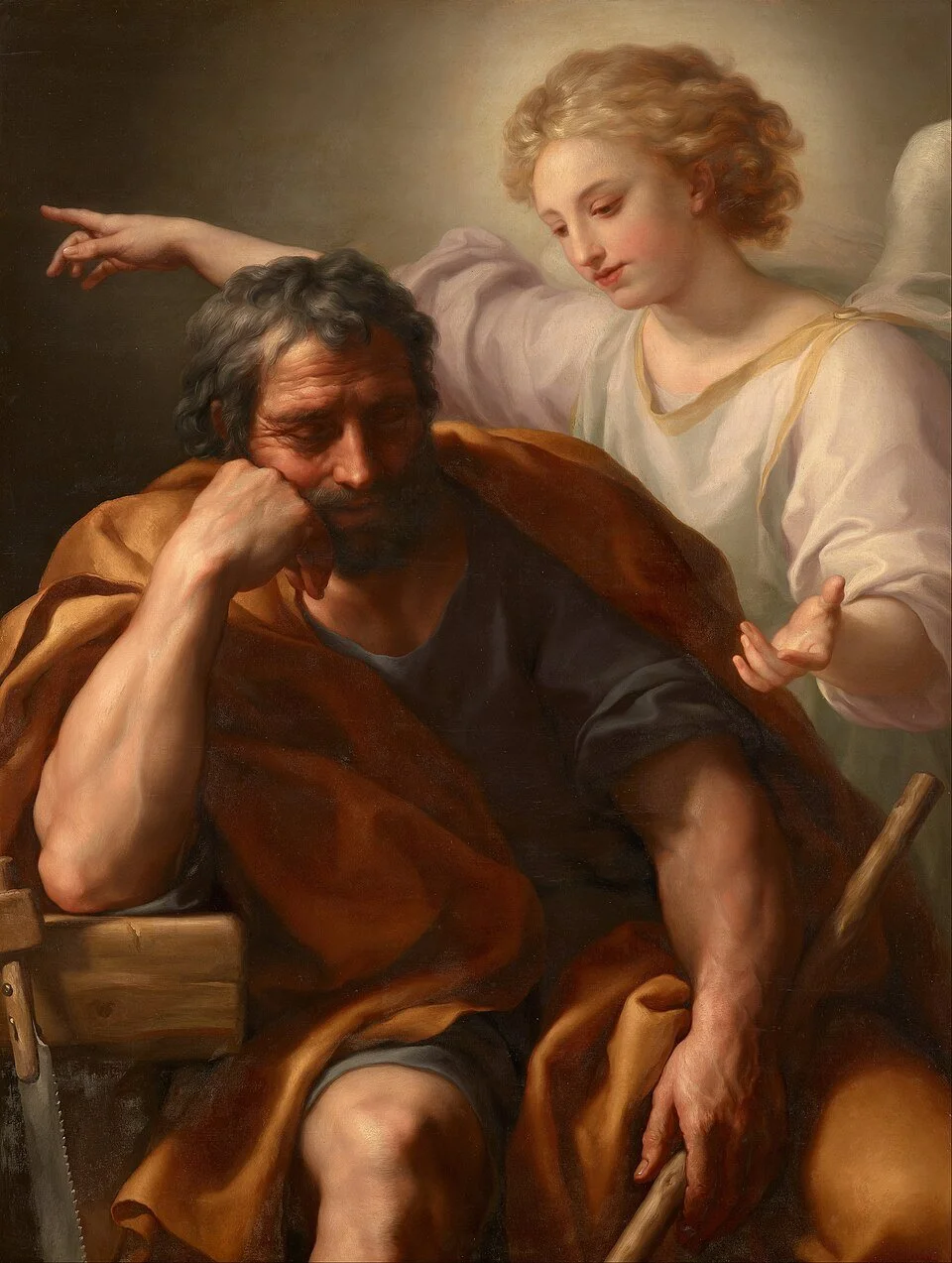
For Catholic Sisters Week, Celebrate St. Joseph, A Very Busy Man

For a number of years, the religious congregations in the United States have marked this week as Catholic Sisters Week. This year the Federation of the Sisters of St. Joseph of Canada invites everyone to join with them in praying to this gentle, loving, hidden man, Joseph, for protection and healing during this time of pandemic.

Some History

Since we were officially founded in France in 1652, St. Joseph has been patron and protector of Sisters of St Joseph throughout the world.

Then 150 years ago, he was named Patron of the Universal Church. To commemorate this anniversary, Pope Francis in a December 8, 2020 Apostolic Letter (Patris corde, “with a father’s heart”), proclaimed it the Year of St. Joseph until December 8, 2021.

Furthermore, Joseph was chosen as the Patron saint of Canada by the first Recollect Franciscan missionaries in 1624 and officially confirmed as Canada’s Patron, by Pope Urban VIII in 1637.

You all surely know the adage: “If you want something done ask a busy person.” So let us pray…

Photo from Toronto Congregation Communications Office

Photo from Toronto Congregation Communications Office

 THE PRAYER

Faithful Joseph,

Teach us to listen and not be afraid to trust as you did in God's promise.


Loving Joseph,

Teach us to love courageously with a heart that is free and just.


Protector Joseph,

Teach us to protect one another and all that belongs to God particularly during this time of pandemic.


Dreamer Joseph,

Teach us to dream a world where all are neighbours:

a vision illumined by God’s light.


Gentle Joseph,

Teach us to be gentle with our power and strong in our tenderness.


Teacher Joseph,

Teach us to keep the Word of God close to our heart

and to proclaim it in word and action.


Parent Joseph,

Teach us to be for children a living lesson of goodness and truth,

a blessing of hope for all generations to come.

Amen.


-          Adapted with permission from a prayer by Kathy Sherman CSJ

Celebrating 100 years of Mission and Life in Pembroke Part II

Written by Mary McGuire, csj Published in the Eganville Leader in February, 2021

During the next 11 months we would like to share the amazing story of the Congregation of the Sisters of St. Joseph in Canada/Pembroke Site as we celebrate 100 years of our service and witness in the Diocese of Pembroke and beyond. As we tell our story we would like to express our gratitude, love and prayers to so many of you who have been with us on this journey. Our Congregation is witness to the love and support you have bestowed on our community and we will be forever grateful for these gifts. We would like to say a heartfelt thank you and invite you to read our story in the months ahead as a way of celebrating this important milestone with us.

We hope you enjoyed reading the January story about the humble beginnings of the Sisters of St. Joseph in Canada/Pembroke Site. As we continue to share this grace-filled story, you will be inspired by God’s abundant love that he bestowed on our Congregation. In this second article our story continues with the building of a new Motherhouse on the property known as St. Joseph’s-on-the-Lake.

After our initial move to the property it became clear that a new building was needed to house our growing community and it was to become a home to many Sisters.

On September 15th, 1952 a ceremony of the ‘Turning of the Sod’ for a new Motherhouse was carried out by Bishop Smith who succeeded our initial benefactor, Bishop Ryan, in the Diocese of Pembroke.

The main and first section of our Motherhouse was built only a few hundred feet from the original farmhouse and was completed in 1954. One Sister recalls loading wheelbarrows with furniture and pushing them across the field. Mattresses were a problem as they often fell to the ground. A watchful eye would catch them and say, ‘Don’t ruin the mattresses. That’s all we have’.

This first expansion included the building of our Chapel, which was the heart of our home and was blessed by Bishop Smith on December 12th, 1954 during a Mass of Thanksgiving. Many Sisters, priests and neighbours gathered to celebrate. Following the Mass everyone was invited to lunch in our dining room where the celebration continued.

The Spirit of God was ever present, guiding us in forming a community of genuine, caring women and the loving support was palpable. We felt the oneness of being a vital part of something much bigger than ourselves. Our journey to fulfilling our mission was just beginning.

Over the years our Chapel was offered to the public for Eucharistic celebrations and times of quiet prayer. We had the honour of hosting many sacred events including a wedding, a baptism and some wakes (or funerals) of lay people who had requested this. We also held the wakes and funeral masses of our own sisters in the Chapel.

Throughout the years there was continual progress toward completion of the Chapel and the facility’s furnishings. The many donations included the beautiful Stations of the Cross which were a gift from Father Dowdall and a new Chapel organ was donated by the Catholic Women’s League of Eganville. A statue of St. Joseph was a gift from Father T.J. Hunt and was erected on the lawn in front of the Motherhouse. The plaque at the base of the statue was donated by the Berrigan family. We are very pleased that the St. Joseph statue has found a new home at St. Joseph’s High School in Renfrew.

In 1962, an administrative section, known as the East Wing, was added to the main building. This contained a board room, offices, approximately fifty bedrooms and a spacious auditorium. This addition meant we had more space to accommodate more Sisters as well as host important meetings and events and offer our facility to other community organizations when needed.

In 1967, the West Wing was built to accommodate those aging Sisters who were suffering from ill-health after their years of hard work and dedication to their missions and professions. These special accommodations and facilities included a welcoming and comfortable infirmary, designed and furnished with attention and skill and provided ideal quarters for those requiring nursing care. As our health care facility grew we were able to take in priests and lay people who needed this type of assistance. We had 24-hour nursing care and a Doctor who visited weekly.

This health care facility was of great use to Marianhill at one time. For a short period in 2009, during a transition for some hospital patients to transfer to the new Carefor facility on MacKay Street in Pembroke, we offered our home to 12 infirm patients on our second floor health care unit.

A full-size therapy pool was also part of this west wing addition. Over the years the Sisters made the pool accessible to the local community who needed this type of therapy for healing. One of our Associates, Anita McGean, volunteered to oversee and schedule appointments to swim in the pool on a weekly basis. A referral from a Doctor was required and it was recognized as a way to give back to our supportive community. It was such an important part of our ministry and was so appreciated. The use of the pool was offered free to those who would use it and there were many gestures of appreciation. One man, after a serious accident said, “This therapy pool saved my life and allowed me to walk again.”

Although these expansions provided a warm and welcoming home to the Sisters we were always aware that the land and its original purpose as a farm shaped our culture as a Congregation. Farmers are very dependent on the weather (God’s Providence) and dependent upon each other as neighbours. Those traits inspired the hospitality and simplicity that characterizes us and our community. Our attentiveness to the needs of smaller communities, especially rural communities, has been a value of our Congregation in our apostolic outreach over the years.

From those early days of our journey a debt of gratitude is owed. The Peterborough Congregation sent 27 of their Sisters who volunteered to join the Pembroke Congregation early in our existence. This was a pure gift to our community and would not have been an easy decision to make at that time.

Priceless was the friendship of Bishop Ryan and Father Dowdall who went above and beyond their contributions of interest and precious time. Father Dowdall was unfailing as the most effective public relations promoter of our community.

With bricks and mortar our story supported a foundation in Pembroke to be of service to God’s people. The Sisters were open to all possibilities. Wherever there was a need, the community responded. We received so much affirmation and support. It is true, when you give generously from the heart, it is returned one hundred fold. This was our experience and we are so grateful.

This story ends in thanksgiving of a very special gift that we received - one that we enjoy to this day. In 1968, through the generosity of the owners, a summer camp on the Madawaska River, not far from Combermere, was donated to the Sisters of St. Joseph. The large and completely furnished dwelling was built by Monsignor Biernacki and at his death, was inherited by a number of priests who were both American and Canadian and had, in former times, enjoyed the hospitality of Monsignor Biernacki at ‘II Nocturne’, as it was named. This four-season camp is beautifully situated on the River and was gratefully accepted by the Sisters who continue to use it throughout the year.

Stay tuned as our story unfolds in 2021.

Pembroke The first motherhouse.jpg
pembroke sosj blessings building.jpg