“We are in critical times and therefore creative times. … Structures have collapsed and with them many ways of looking at things. But dreams remain. They are an essential part of being human and will always persist. They even allow new visions and furnish the enthusiasm needed for thought and creativity.” [1]
Leonardo Boff in his book Ecology and Liberation speaks of a “creative crisis” and of a new paradigm intended to shift humans from dominance over creation to recognition of our oneness with creation. He goes on to reflect on some of the same issues identified by Pope Francis i.e. religion and ‘religious feeling’ [2] in relation to the new cosmology, culture, social justice and science and technology. He then invites us to move “from ecology to global consciousness” [3] and from “world consciousness to mysticism” [4] .
It is this movement that inspires me to connect creativity, mysticism and the hope-filled messages of Pope Francis, Boff and the late Richard Wagamese. Pope Francis writes: “Each creature possesses its own particular goodness and perfection… Each of the various creatures, willed in its own being, reflects in its own way a ray of God’s infinite wisdom and goodness.”[5]
Each and every part of the universe and of the earth community also reflects God’s creative Love through its integrity, incredible variety and differentiation.
Speaking of creativity, Wagamese says: “You stoke the fires of creativity with humility, gratitude and awareness. You need to ask for the gift to be directed. Writing is a spiritual process. To create, you need to connect with the Creator.” [6] What a powerful witness to the link between creativity and contemplative living, mysticism in action.
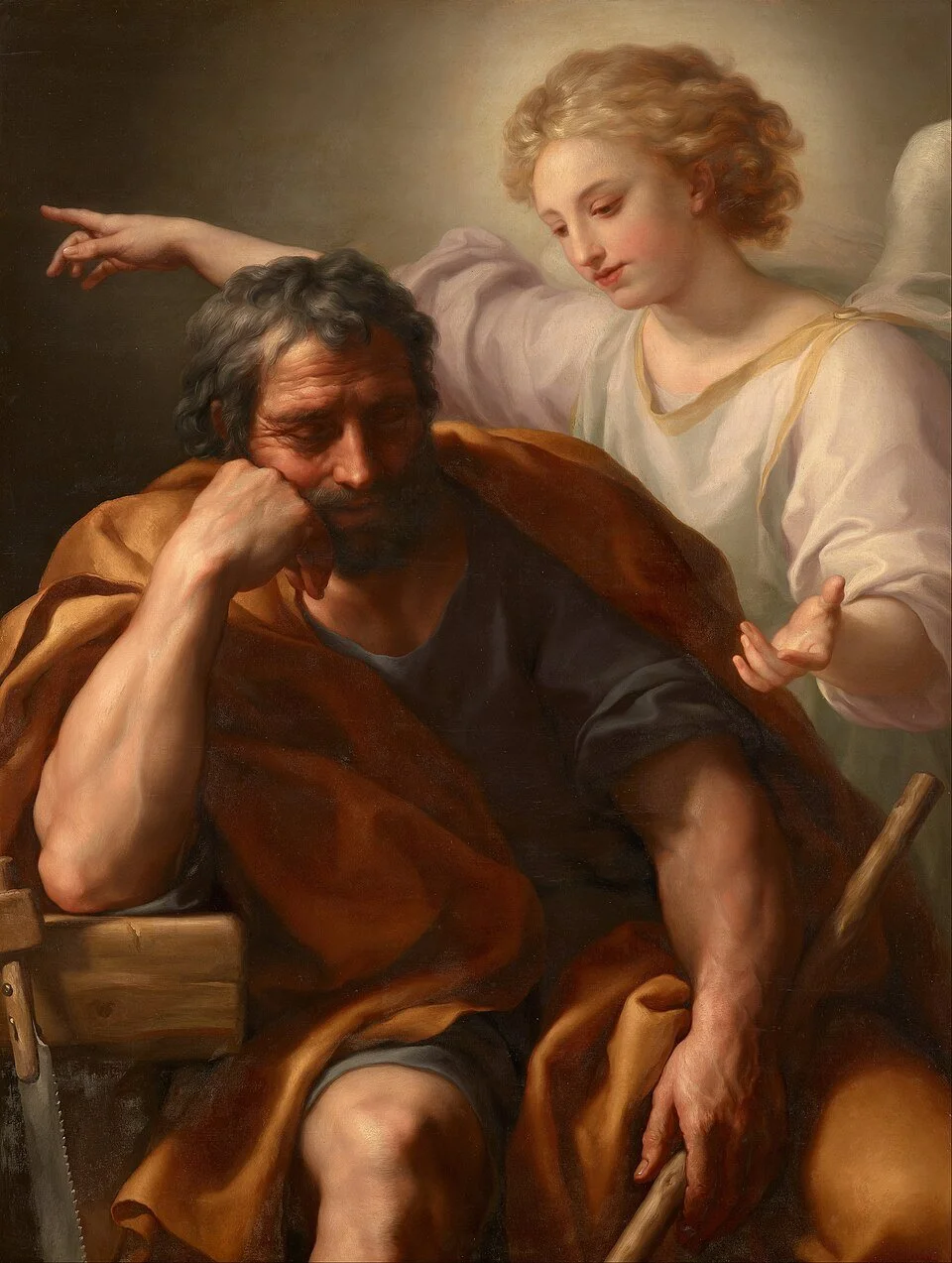
Wagamese also speaks of dreams. He says: “My elders say that the dream world is a reality, just as valid, just as vibrant, just as alive as the physical world. Dreams are not illusory things. They are meant to guide us. They ask us to use our intuition to interpret them. That’s their biggest gift – returning us to our intuition, our highest level of thought. When we intuit, we think spiritually with a free, flowing energy.” [7]
Pope Francis dared to dream. He dreamed of inviting a global dialogue on care for our common home. I believe his dream - coming alive in so many - is creating a new energy and compassion for and with creation today. He says: “In this Encyclical, I would like to enter into dialogue with all people about our common home.” [8] Elsewhere, speaking of his patron, Saint Francis of Assisi, he says: “He was particularly concerned for God’s creation and for the poor and the outcast. He loved, and was deeply loved for his joy, his generous self-giving, his openheartedness. He was a mystic and a pilgrim who lived in simplicity and in wonderful harmony with God, with others, with nature and with himself. He shows us just how inseparable the bond is between concern for nature, justice for the poor, commitment to society and interior peace.” [9]
What do I dare to dream? What ‘new visions’ arise from my dream? How does it feed my thought, creativity and intuition? How does my dream lead me to contemplation and compassion? Can my dreams lead to a mystic heart?
Leonardo Boff dreams of human beings moving from the old paradigm of dominance and individuality to a new paradigm in which we know our interconnectedness, our interdependence and our belonging to an earth community. In speaking of this as ‘worldconsciousness’, Boff says: The human mind and heart have a special place for those promptings of the spirit that urge humankind to a mystical relation with the universe as a whole. In this new conception, spirit is contrasted not with the body but with death. To be spiritual means living in accordance with the thrust of life toward and in unison with society and nature. In its mature stage, spirituality becomes mysticism. This allows us to transcend the material limitations of things and to discern behind the structure of reality that area where “tenderness” comes into its own. It also shows us where the welcoming and loving mystery prevails that enables us to communicate with God, the Father and Mother whose loving kindness is boundless. [10]
I love that Boff contrasts spirit ‘not with the body but with death.’ Our bodies are aging and failing, but our spirits are called to an even greater vitality – not just for ourselves, but for the deeper living out of our call as “the Congregation of the Great Love of God”: to be “women of active, inclusive love.” How freeing to know and believe that this ministry depends not on our physical capacities but on the depth, breadth and strength of our love.
[1] Leonard Boff, Ecology and Liberation A New Paradigm (Maryknoll, NY: Orbis Books, 1995) Preface Pg xi
[2], [3], [4] ibid. Table of Contents p. vii-ix.
[5] Pope Francis Laudato Si’ article 6.
[6] Richard Wagamese, Embers, One Ojibway’s Meditations (Douglas McIntyre Ltd., 2016 )
[7] Ibid. p. 97
[8] Pope Francis, Laudato Si’ Article 3.
[9] Ibid. Article 10.
[10] Leonardo Boff, Ecology and Liberation A New Paradigm p. 137-138.